Why Old Vinyl Vertical Blinds Fall Down — and the Best Ways to Replace Them
Published August 12, 2026
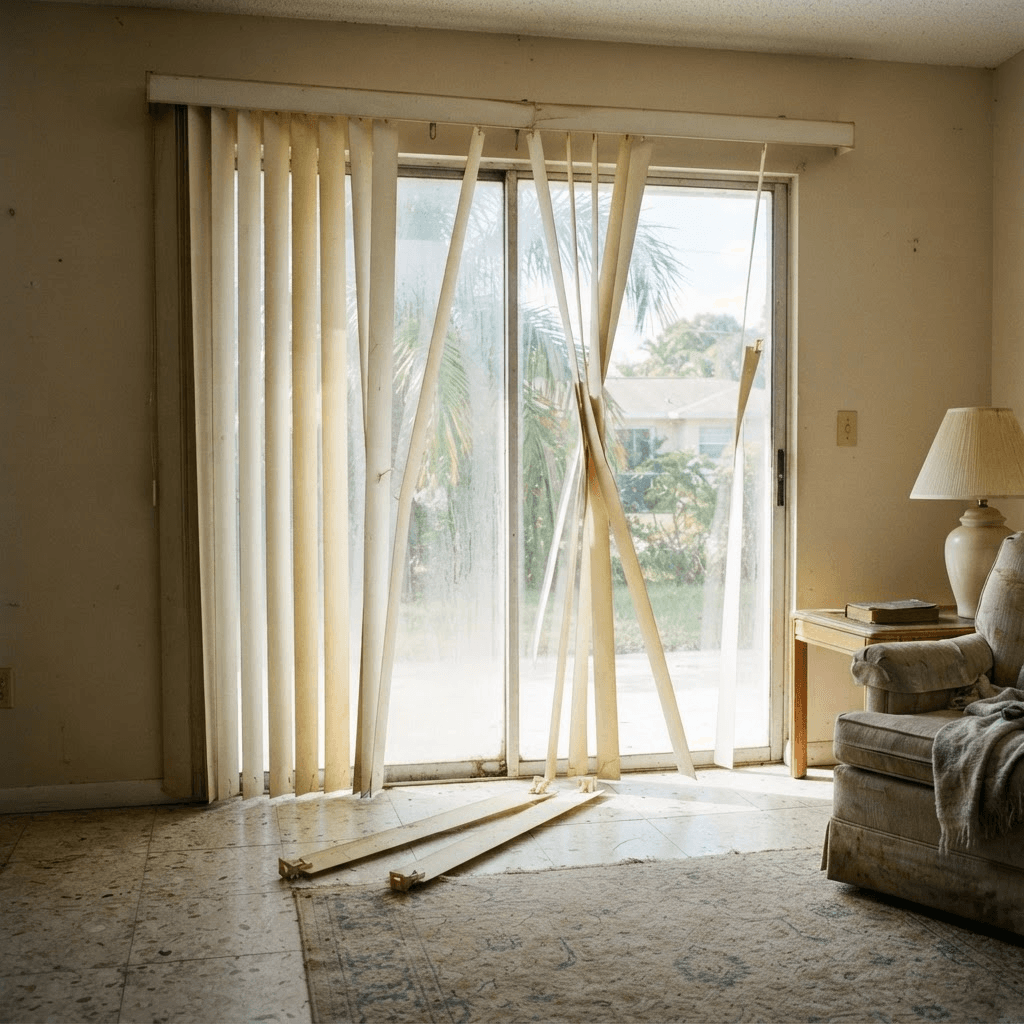
If you own a home in Southwest Florida with a sliding glass door, there is a good chance you have lived with vinyl vertical blinds — and an even better chance that, sooner or later, the vanes started popping out of the headrail and falling to the floor. It is one of the most common window-treatment complaints we hear across Sarasota and Lakewood Ranch. The good news: it is completely normal wear, and you have more (and better) replacement options today than you did the last time those blinds went up.
Why Vinyl Vertical Blinds Fall Down
Vertical blinds fail from the top down. Each vane hangs from a small plastic hook on a carrier inside the headrail, and that connection point takes the strain every time the blinds are opened, closed, or rotated. Over years of daily use — plus the intense Florida sun beating through the glass — the vinyl becomes brittle and the little hook holes tear or stretch until the vane simply drops out. Once one goes, others usually follow, because they have all aged the same way.
- Sun and heat: UV exposure makes vinyl brittle and warped over time, so vanes bow, curl, and crack — especially on hot, west- and south-facing sliders.
- Torn hook holes: the punched hole at the top of each vane slowly tears through, and the vane loses its grip on the carrier.
- Worn or broken carriers: the plastic carriers inside the headrail wear out or seize, so vanes drag, twist, or refuse to rotate.
- Everyday handling: pushing the vanes aside by hand instead of using the wand puts stress right where they are weakest.
- Missing weights and chains: the bottom weights and connecting chain go missing, letting vanes swing, tangle, and pop loose.
A stray vane that has slipped out can sometimes be reseated in its carrier, and a single cracked vane can occasionally be swapped if you can still source a match. But when vanes are yellowed, warped, and falling out in several places at once, the whole set has reached the end of its life. At that point, replacement is more sensible than chasing one failure after another — and it is the perfect moment to rethink what actually belongs on that slider.
Six Ways to Replace Old Vertical Blinds
The best replacement depends on how you use the door, how much light and privacy you want, and the look you are after. Here are the six directions our clients choose most often — from a simple like-for-like upgrade to a full step up in style and function.
1. New Vinyl Vertical Blinds
Sometimes the vertical blind is still the right answer — you just want a fresh, better-built version. Today's Norman vertical blinds are a big improvement over the builder-grade sets most homes started with: a sleek valance-free headrail removes the bulky top, and S-curved vinyl vanes block more light and close tighter than the old flat vanes. They are cordless and budget-friendly, making them the easy, practical choice if you like how verticals work and simply want them to stop falling down.
2. Portrait Vertical Honeycomb Shades
If you love that a treatment draws side to side across the slider but want something quieter, softer, and more energy efficient, a vertical honeycomb is the natural upgrade. The insulating honeycomb cells trap air to cut Florida heat gain through the glass, and the soft pleated fabric stacks neatly aside on a valance-free track — no rattling vanes, no plastic look. It is one of the most popular ways to move on from vinyl verticals without giving up the sliding function.
3. SmartDrape Motorized Panels
Norman SmartDrape blends the softness of fabric drapery with the traversing function of a vertical blind — and adds motorization. Full-length fabric panels glide across the track on their own at the touch of a button, remote, or schedule, which is ideal for wide pool-facing walls of glass that are awkward to operate by hand. It is the modern, upscale successor to the vertical blind, and it looks like a designer treatment rather than a builder default.
4. Roller & Solar Shades
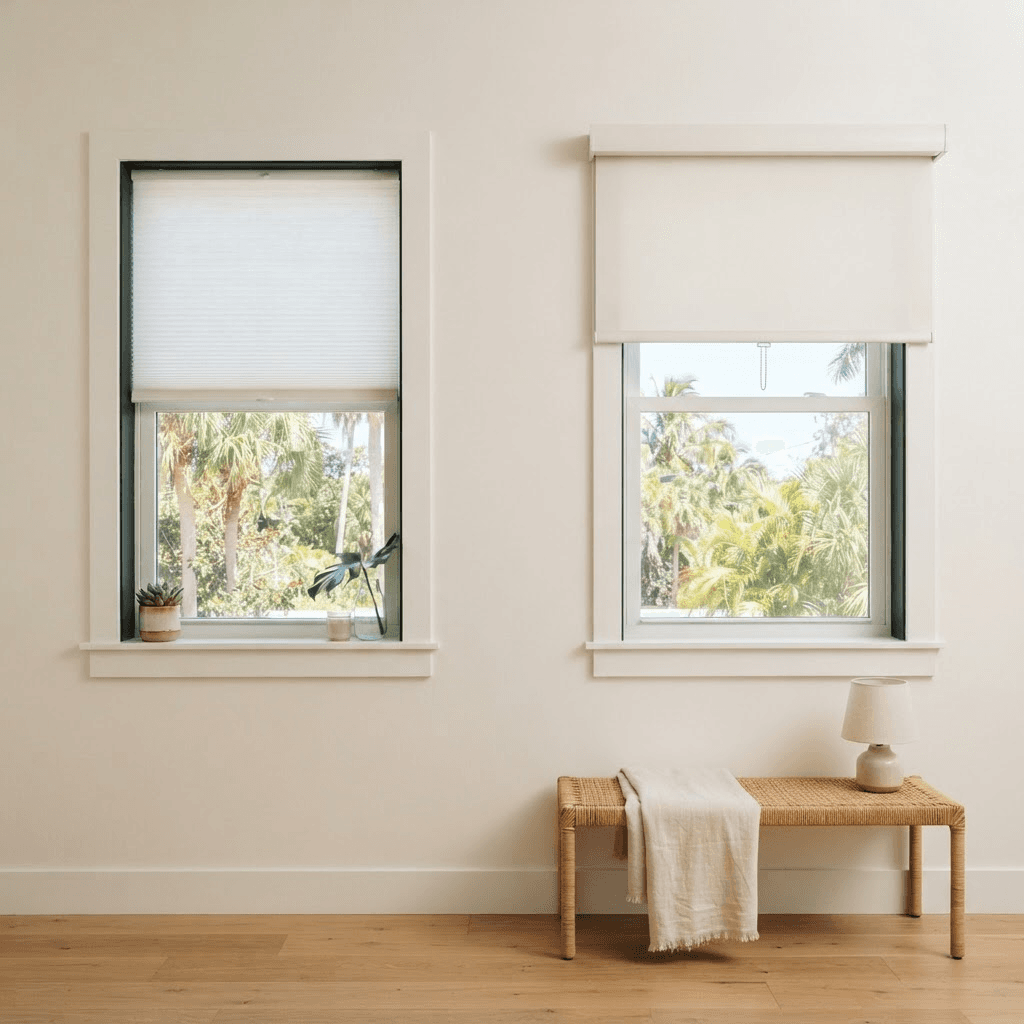
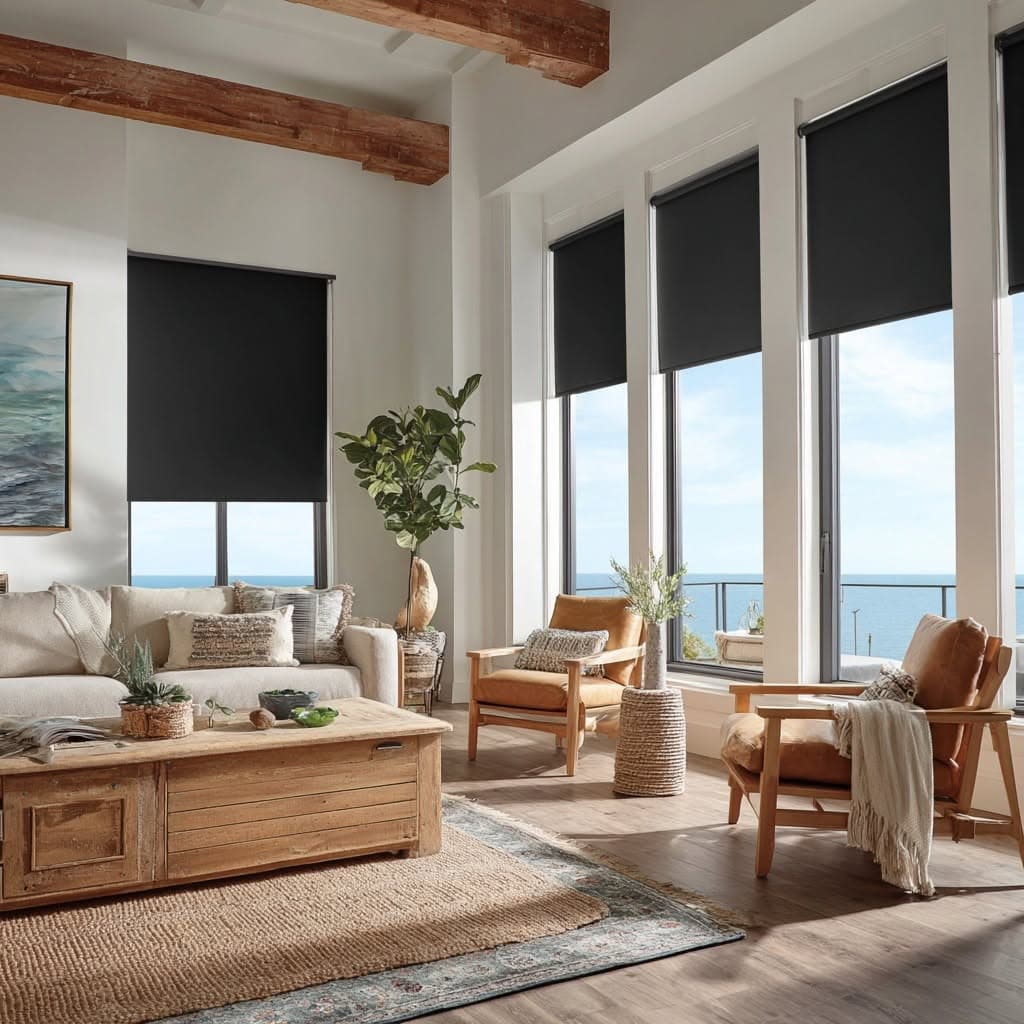
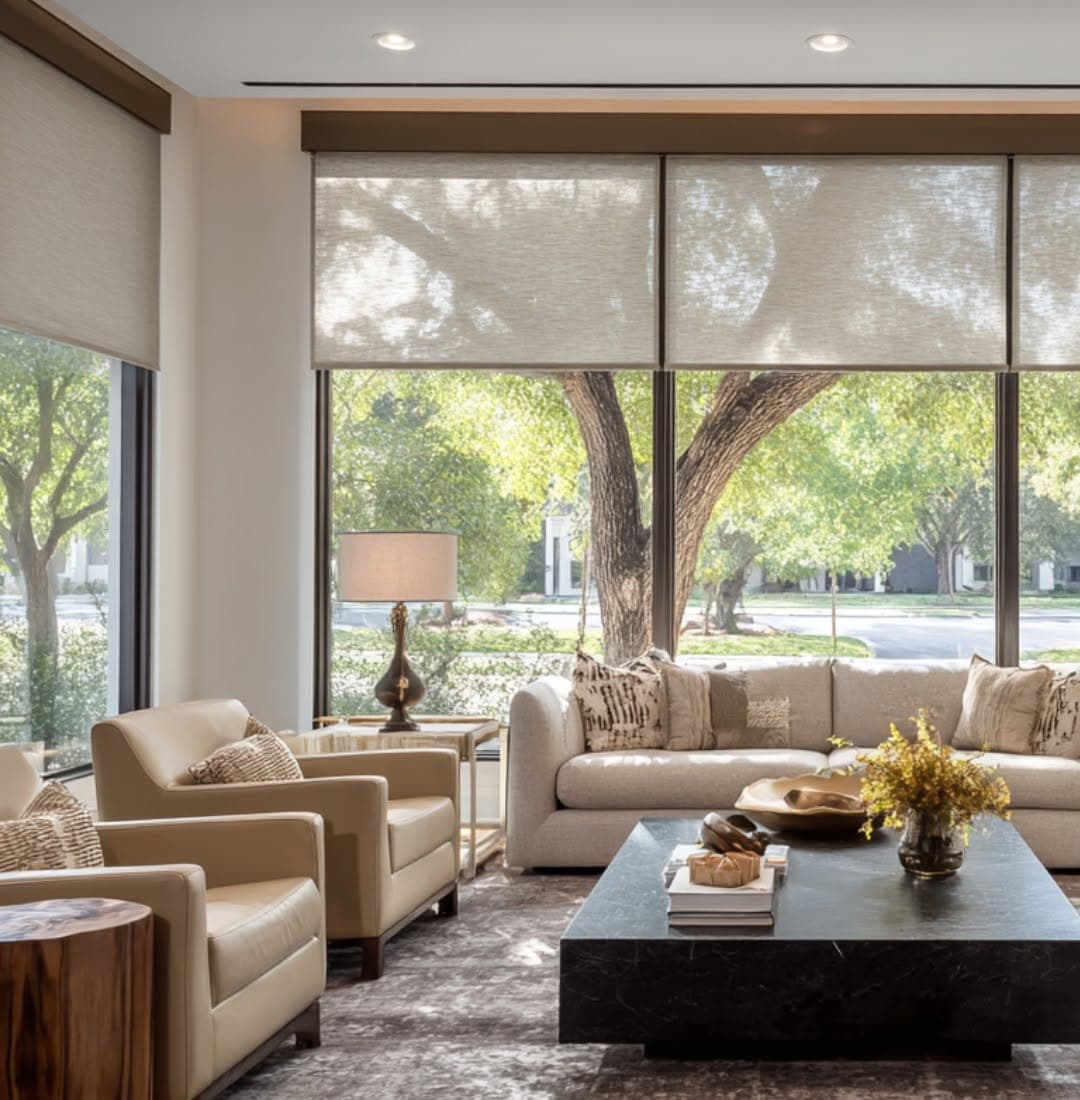
For a clean, contemporary look, roller and solar shades give you a simple band of fabric that disappears when raised. Solar screen fabrics are especially popular on sun-facing sliders because they cut glare and block UV while preserving the view to your lanai or pool. On a wide door we can couple shades or run a single large roller, and cordless or motorized lifts keep everything cord-free and easy to use.
5. Custom Drapery
If you want to soften a big wall of glass and add warmth, height, and a little sound absorption, custom drapery draws aside on a traverse or ripplefold track much like a vertical blind did — but with real fabric and a tailored, high-end feel. Drapery also layers beautifully over a roller or solar shade, giving you both light control and a finished, designer look on the slider.
6. Track Plantation Shutters
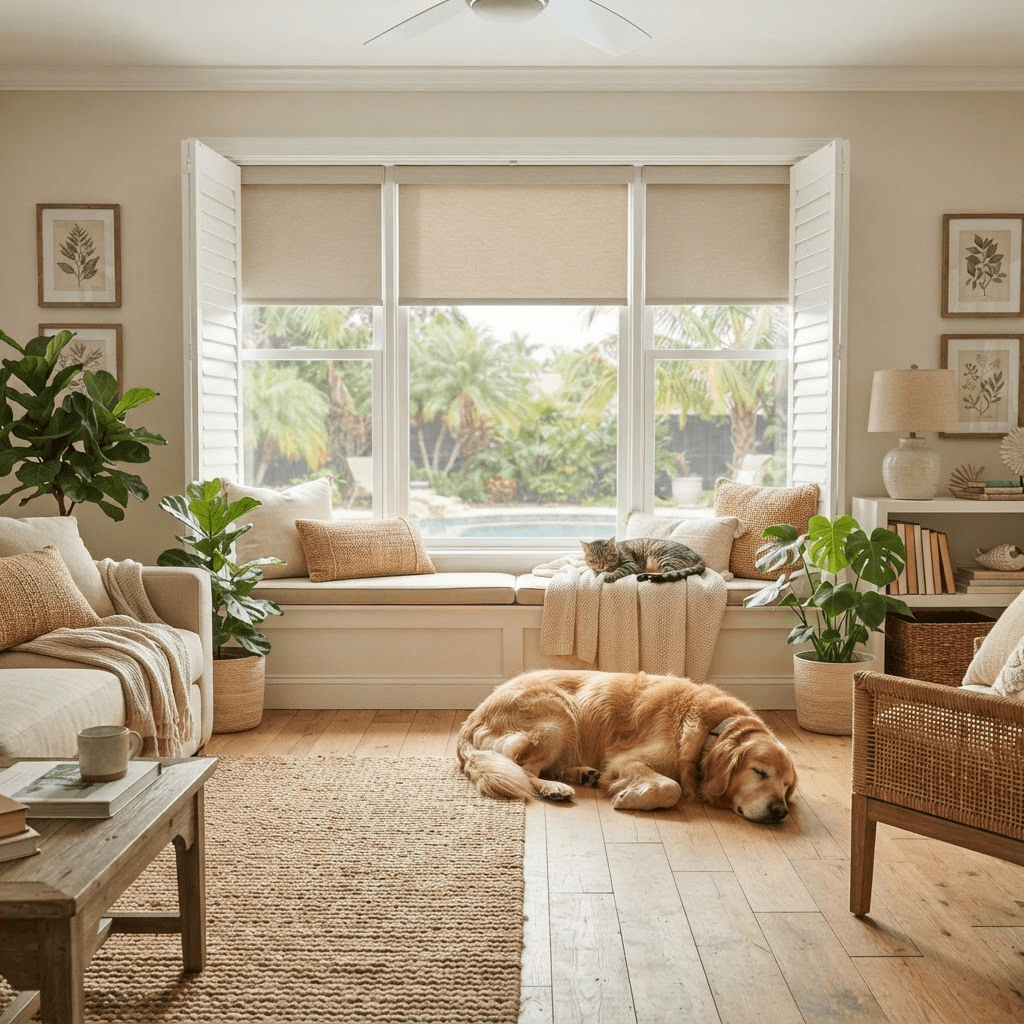
For the most architectural, built-in result, plantation shutters can be mounted on a bypass or bi-fold track so the panels glide or fold aside like the door itself. You get the same adjustable louver light control as window shutters, a durable finish that stands up to Florida humidity, and a permanent, high-value look that matches the shutters elsewhere in your home.
Which Replacement Is Right for You?
A quick way to narrow it down: choose new vinyl verticals for the simplest budget-friendly refresh, vertical honeycomb for energy efficiency with a soft look, SmartDrape or drapery to elevate a wide wall of glass, roller and solar shades for clean modern glare control, and track shutters for a permanent architectural upgrade. Every one of these stacks or draws clear of the door so it still slides — and all are available cordless or motorized for safety and easy operation.
Not sure which fits your slider best? That is exactly what our free in-home consultation is for. We will look at how you use the door, the light and privacy you need, and your budget, then measure and install the right replacement so you never have to pick a fallen vane up off the floor again. We serve homeowners throughout Sarasota, Lakewood Ranch, Venice, and the surrounding Manatee and Sarasota County communities.
Explore Replacement Options for Your Sliders
From a fresh set of verticals to a full designer upgrade — every option is built to stack clear of the door.
Ready to Explore Your Options?
Every home is different. Book a free in-home design consultation and we'll help you choose the right window treatments for your space, style, and budget.