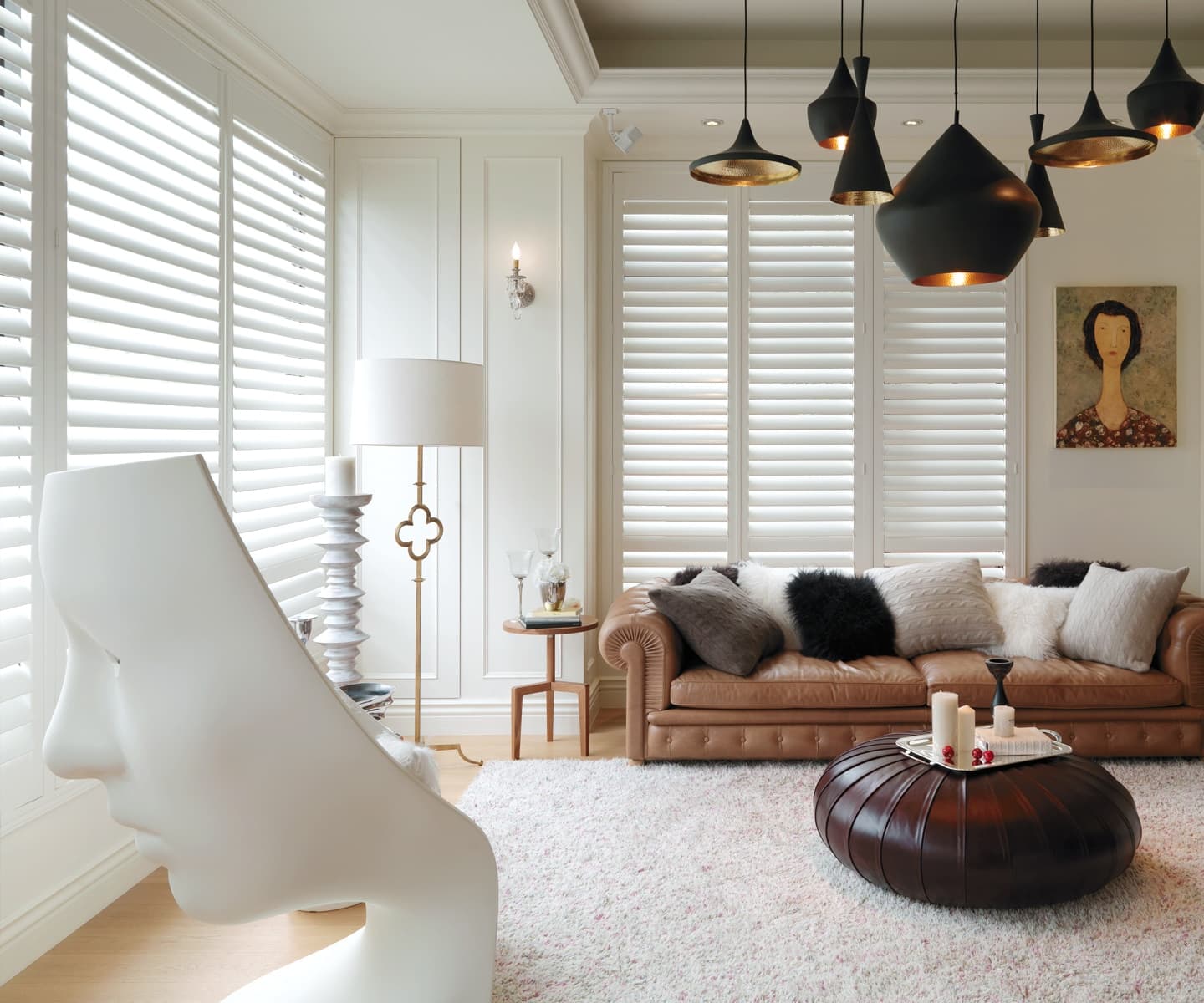
Motorized Plantation Shutters: Are They Worth It?
What you'll learn
- What motorization adds to a classic shutter.
- How the tilt motor and power options work.
- The rooms and windows where they earn their keep.
- What to weigh before choosing them.
Plantation shutters are timeless, but tilting the louvers on a wall of windows — or on tall glass you can barely reach — gets old fast. Motorized plantation shutters keep everything homeowners love about the shutter and add one-touch, synchronized louver control, so an entire room adjusts its light and privacy together in a second.
What Motorization Adds
A small, quiet motor in the shutter frame tilts the louvers via remote, app, schedule, or voice — the panels still open normally on their hinges for cleaning and full views. Every shutter in a room can move in unison, which looks polished and takes the fuss out of chasing the sun across the day.
Power and Control
- Rechargeable battery motors make motorization a clean retrofit with no wiring — the most common choice for finished homes.
- Hardwired power suits new construction and remodels where you can run low-voltage wiring before finishing.
- Integrate with smart-home platforms and voice assistants, or group shutters into scenes alongside shades and lights.
Where They Make Sense
The payoff is highest on hard-to-reach and numerous windows: tall foyer and stairwell glass, wide living-room banks, and sunny western exposures you'd otherwise adjust all afternoon. They're also a strong accessibility choice, letting anyone control light and privacy without reaching or bending.
Ready to put this into practice?
Book a free in-home design consultation and we'll help you apply what you've learned to your specific rooms, light, and budget.