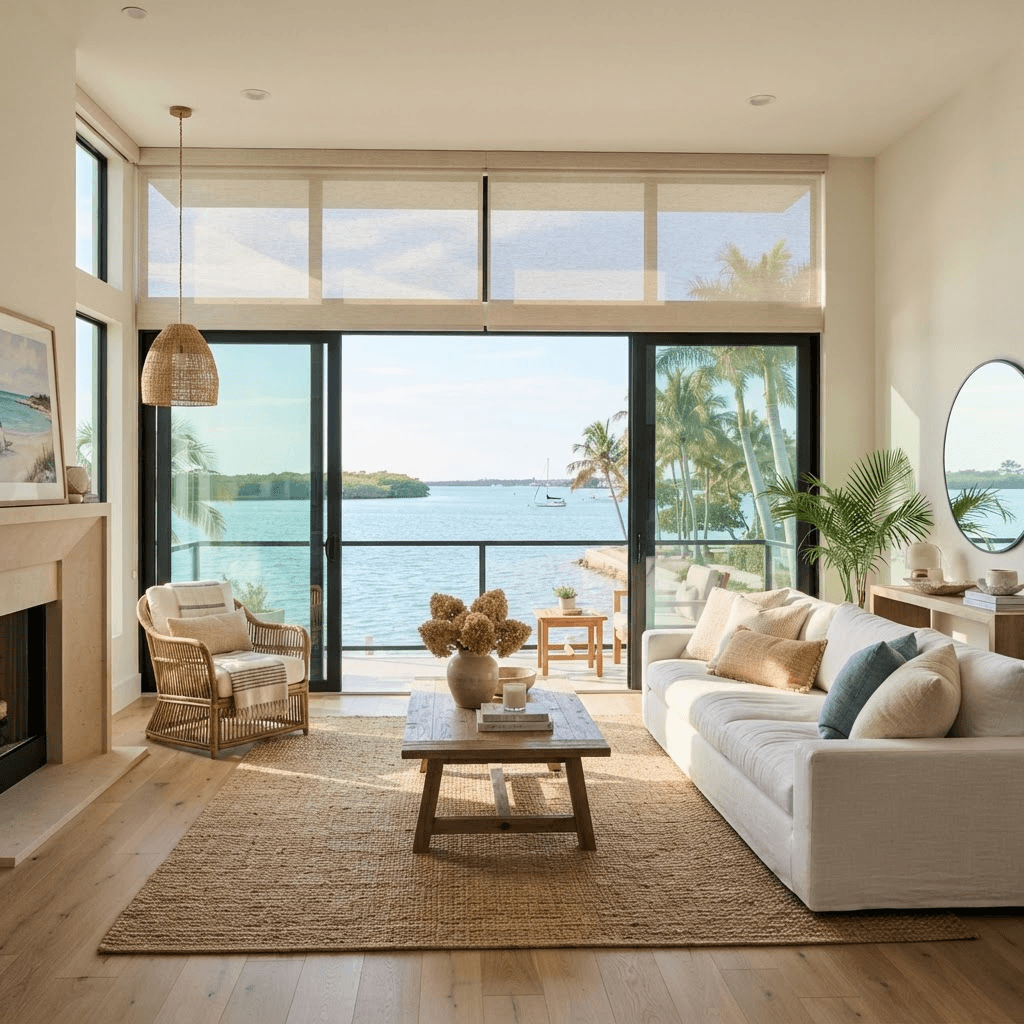
Choosing Window Treatments for Waterfront Homes
What you'll learn
- How to cut glare and UV without giving up your water view.
- Why solar shades are the hero product for waterfront glass.
- Materials that stand up to salt air and intense light.
- How motorization protects both the view and your furnishings.
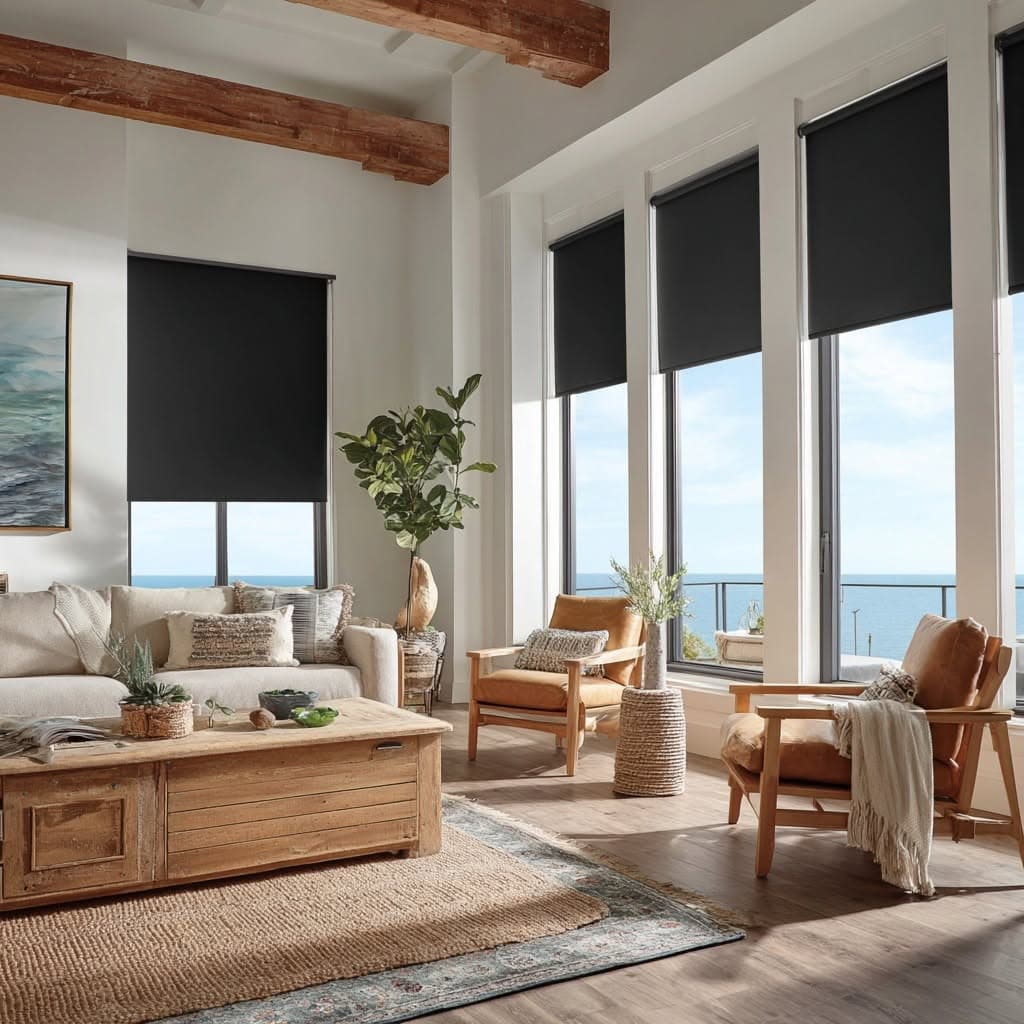
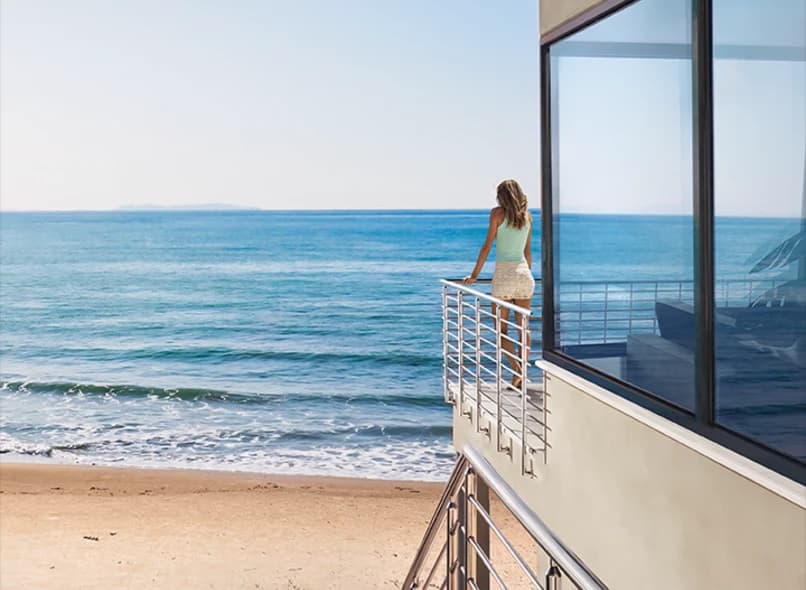
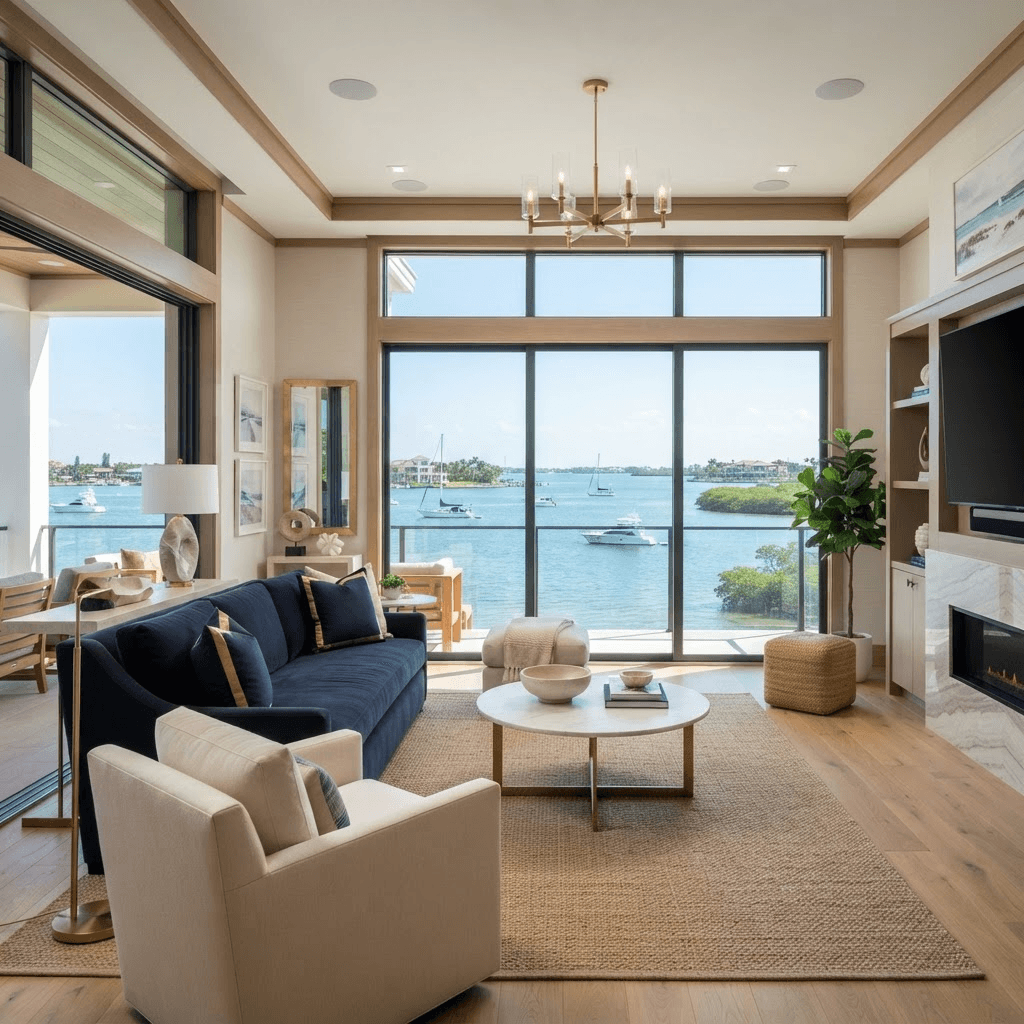
On the water, the view is the whole point — you don't want to bury it behind heavy coverings. But waterfront glass also faces the harshest glare, the strongest UV, and salt-laden air. The goal is a treatment that disappears when you want the view and protects the room when you don't.
Solar Shades: The Waterfront Hero
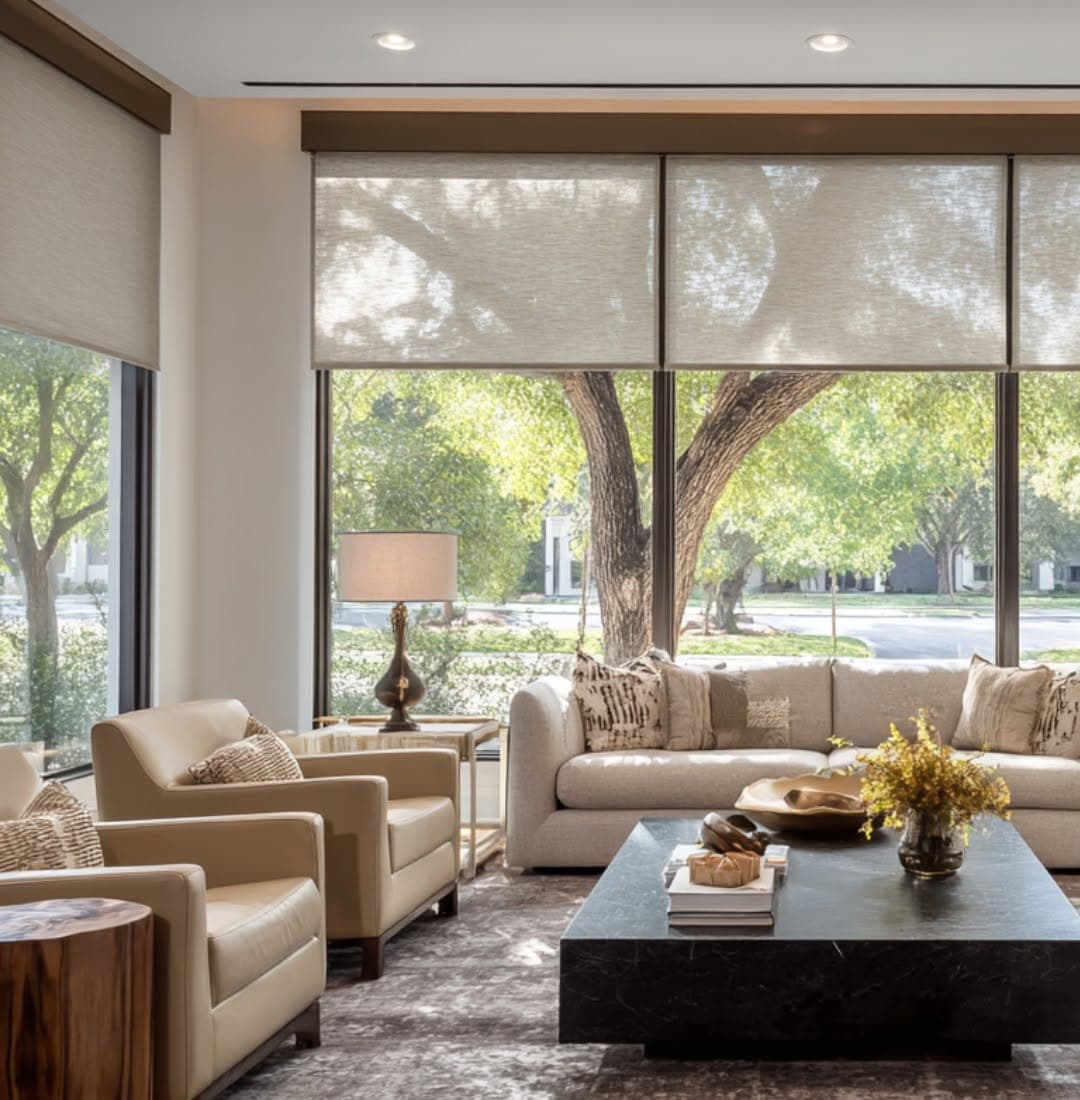
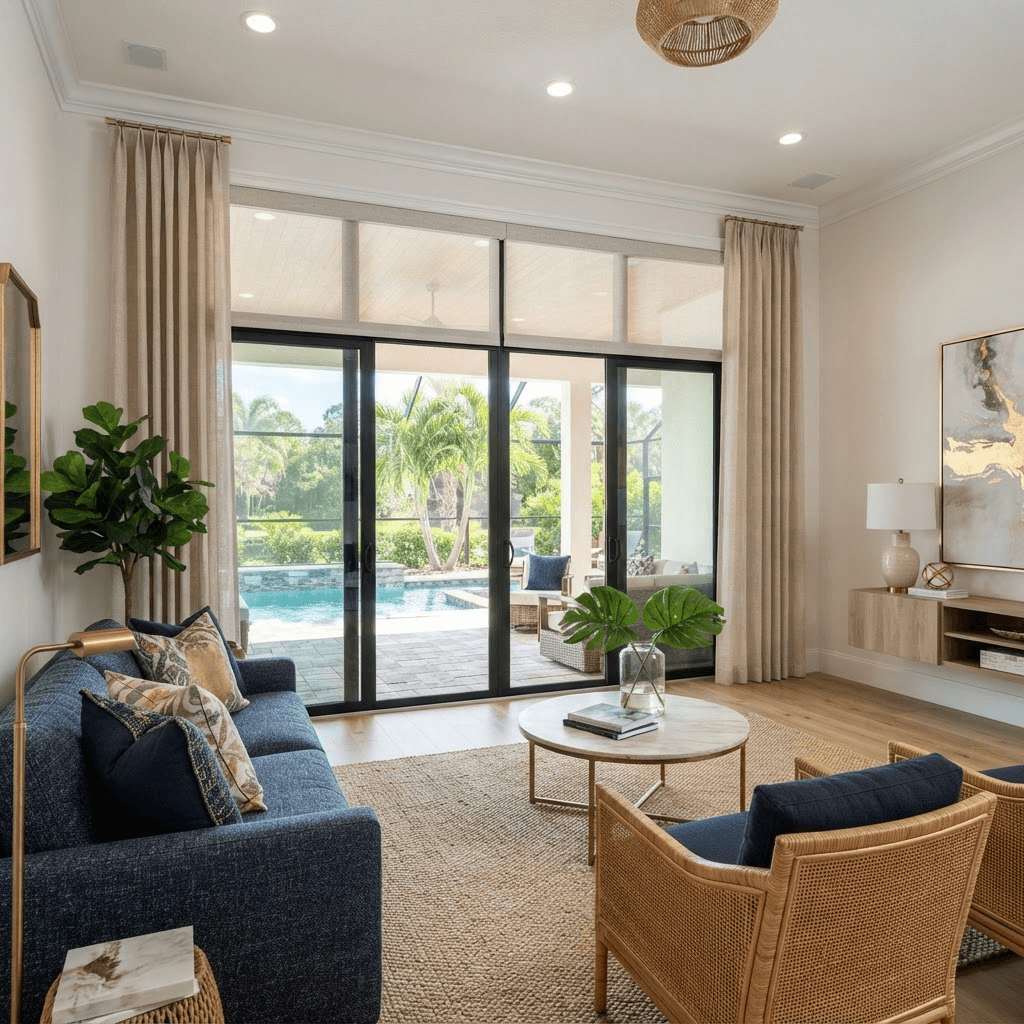
Solar roller shades are purpose-built for this. The mesh cuts glare and blocks UV while keeping your outward view largely intact, so you can look out over the water even with the shades down. Choosing the openness factor lets you balance view versus glare control — tighter weaves for harsh western exposures, more open weaves where you want maximum view.
Protect the Room You Can't See
- UV fades floors, art, and furnishings fast on bright waterfront exposures — solar fabrics and UV-blocking treatments protect your investment.
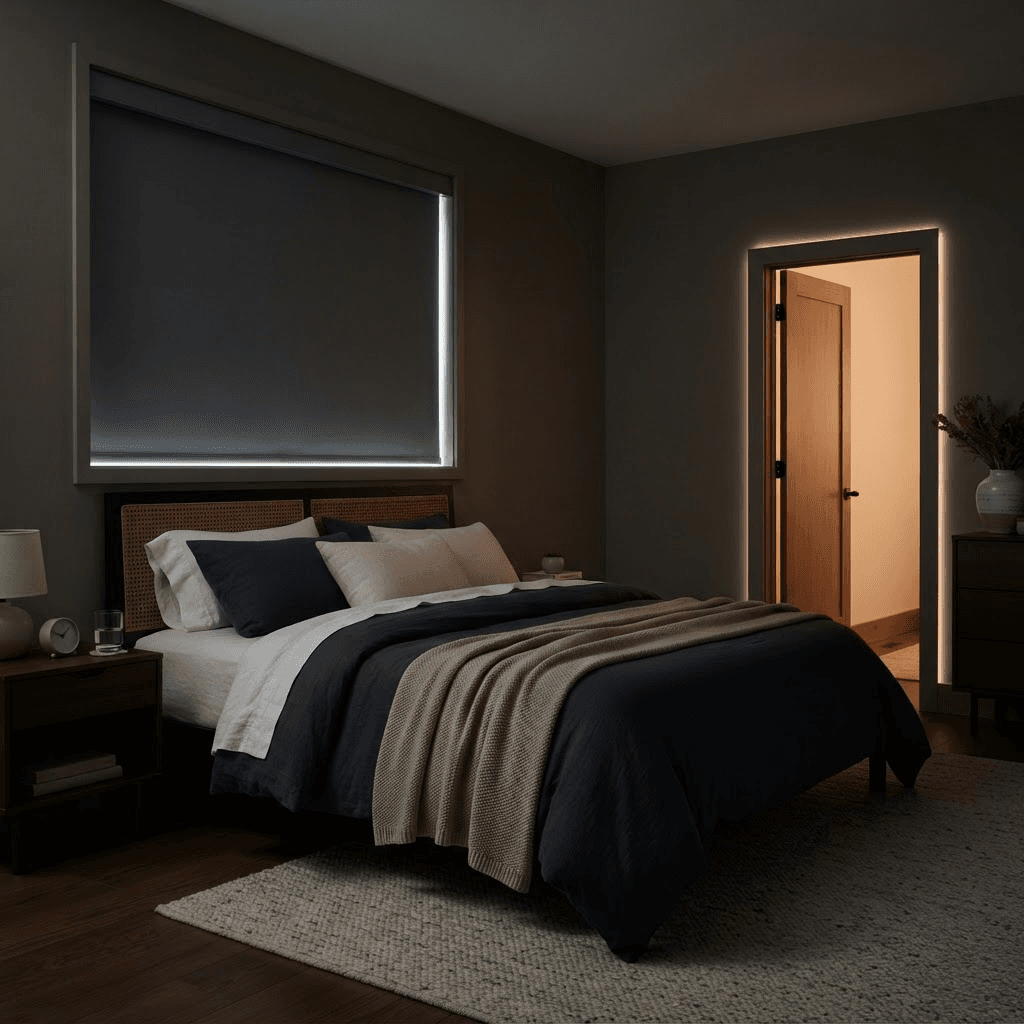
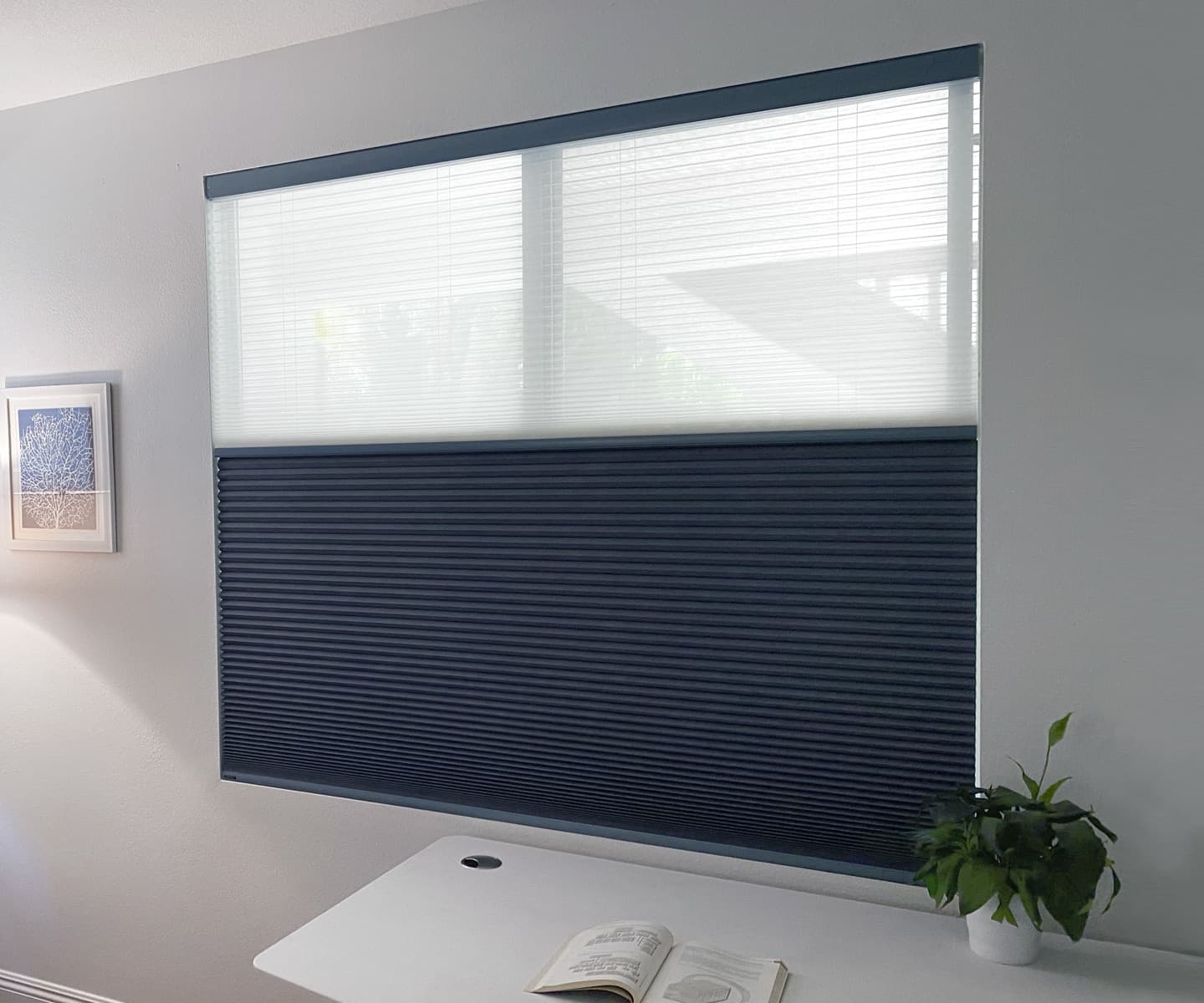
- Layering a light-filtering or blackout shade behind a solar shade gives you evening privacy once the sun sets and the glass turns into a mirror from outside.
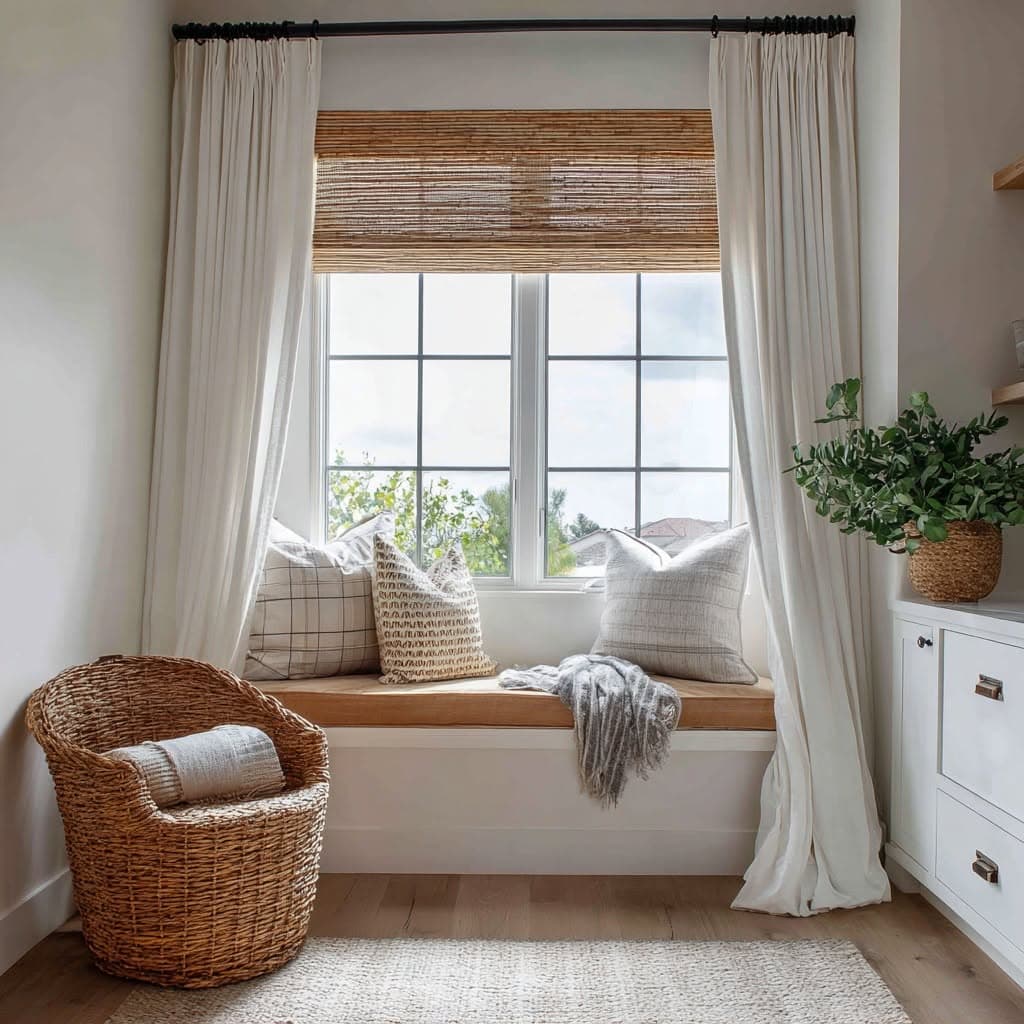
- Man-made fabrics and composite or faux materials resist the salt air and humidity better than natural fibers near the water.
Let It Automate Around the Sun
Motorized shades that follow the sun are ideal on the water: they lower against the harsh afternoon glare and rise again to open the view, automatically. That protects your furnishings during peak UV without you having to think about it, and it's especially convenient for seasonal residents who want the home to manage itself.
Ready to put this into practice?
Book a free in-home design consultation and we'll help you apply what you've learned to your specific rooms, light, and budget.