Specifying Commercial Window Treatments
What you'll learn
- How to spec solar fabric for glare and view.
- Durability and cleanability for high-traffic use.
- Where code and safety requirements apply.
- How to keep treatments on-brand across a building.
Commercial window treatments are a specification, not a shopping trip. In offices, medical suites, and public buildings they have to control glare on screens, survive years of heavy use, meet code, and present a consistent, professional image — often across hundreds of windows. Getting the spec right up front is what keeps the project on budget and out of trouble.
Solar Fabric & Glare Control
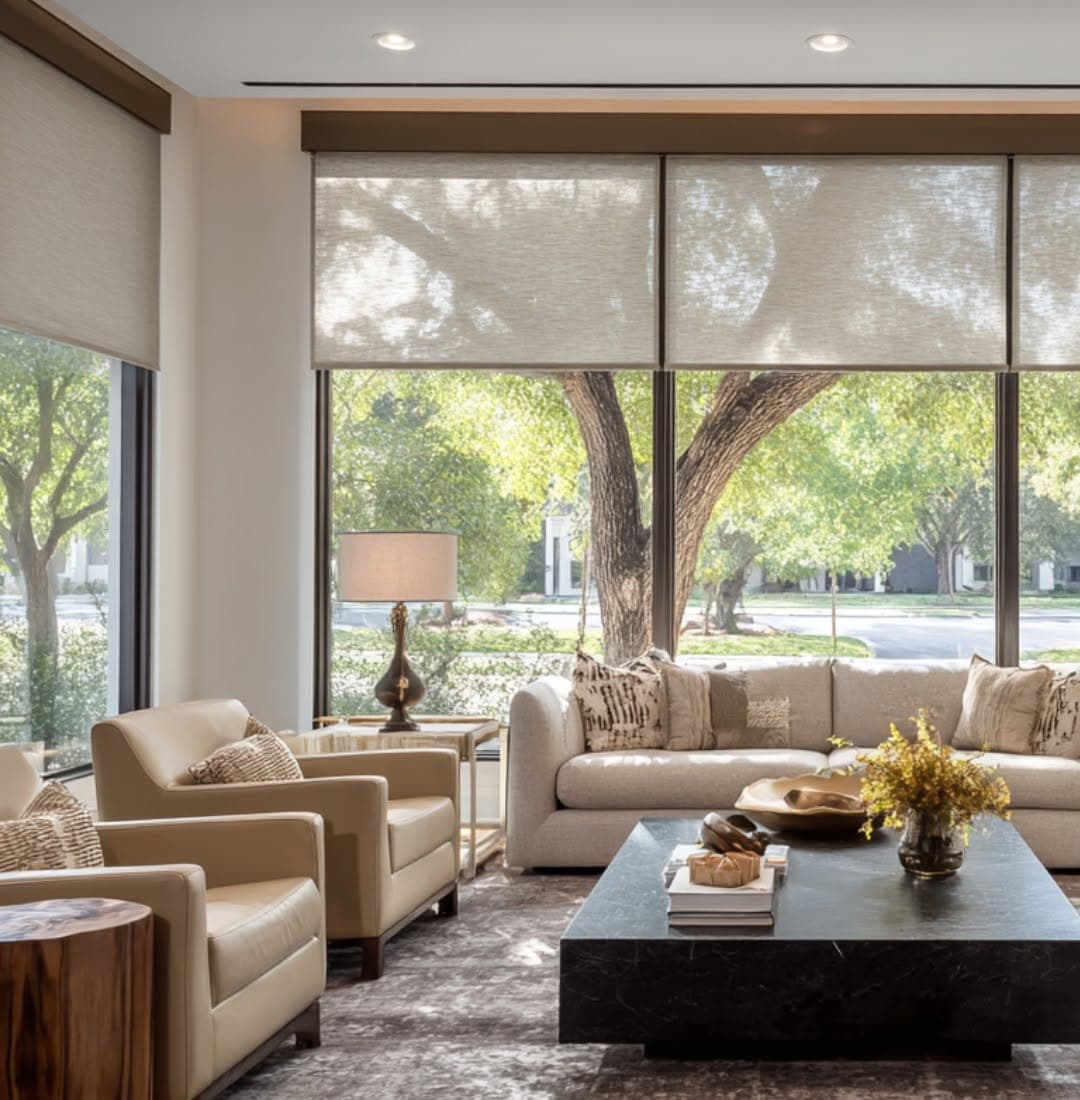
The core spec decision is fabric openness factor — the tightness of the weave. A lower openness (3–1%) cuts more glare and heat for screen-heavy offices and west exposures; a higher openness preserves more view for lobbies and conference rooms. Matching openness to orientation and use across the building is the heart of a good commercial spec.
Durability, Code & Maintenance
- Commercial-grade components and fabrics are built for daily cycling and easy cleaning in high-traffic spaces.
- Many jurisdictions require flame-rated fabrics in commercial and assembly occupancies — we specify to code.
- Cordless and motorized options improve safety and accessibility and simplify maintenance across many openings.
Brand Consistency at Scale
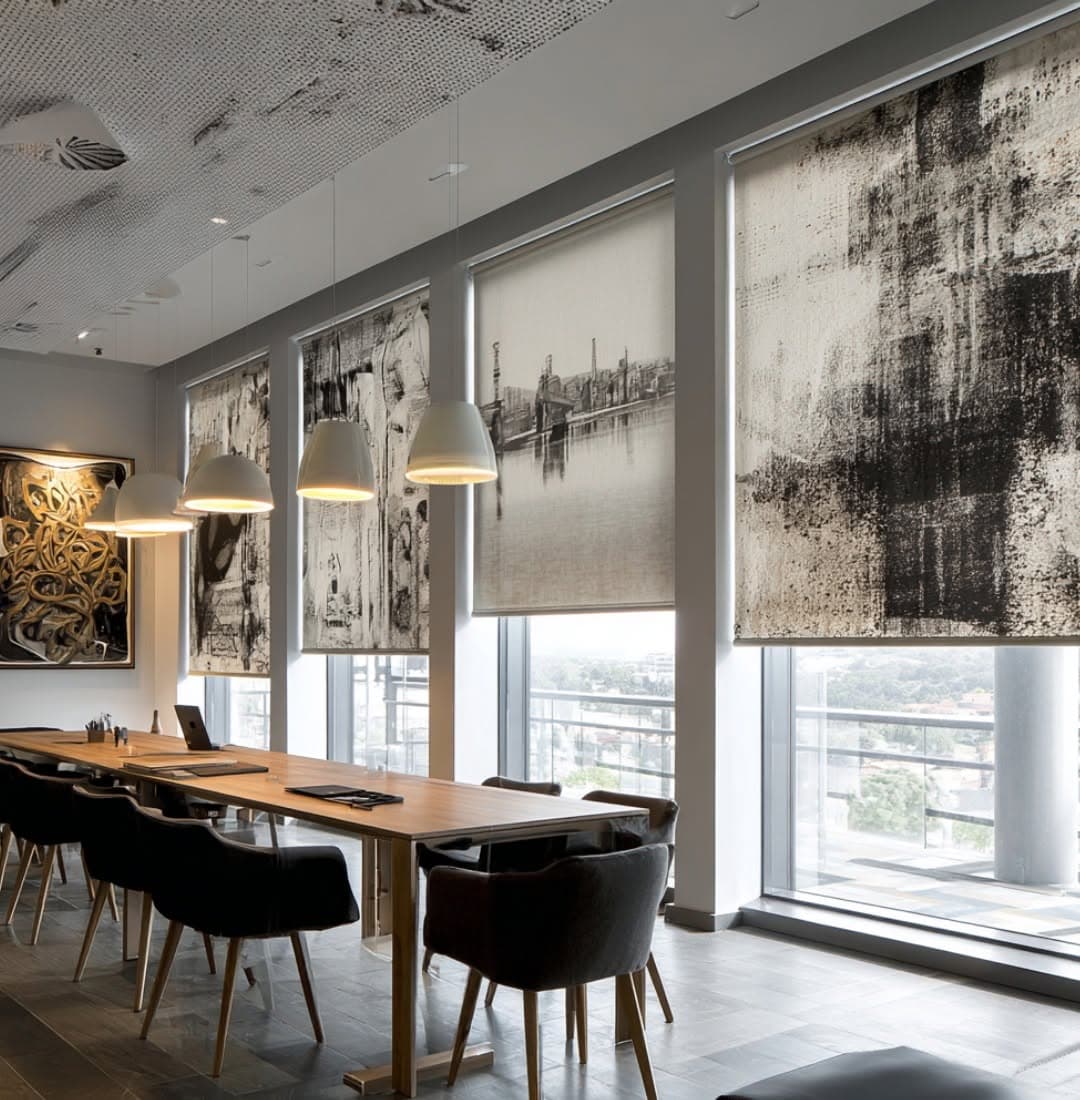
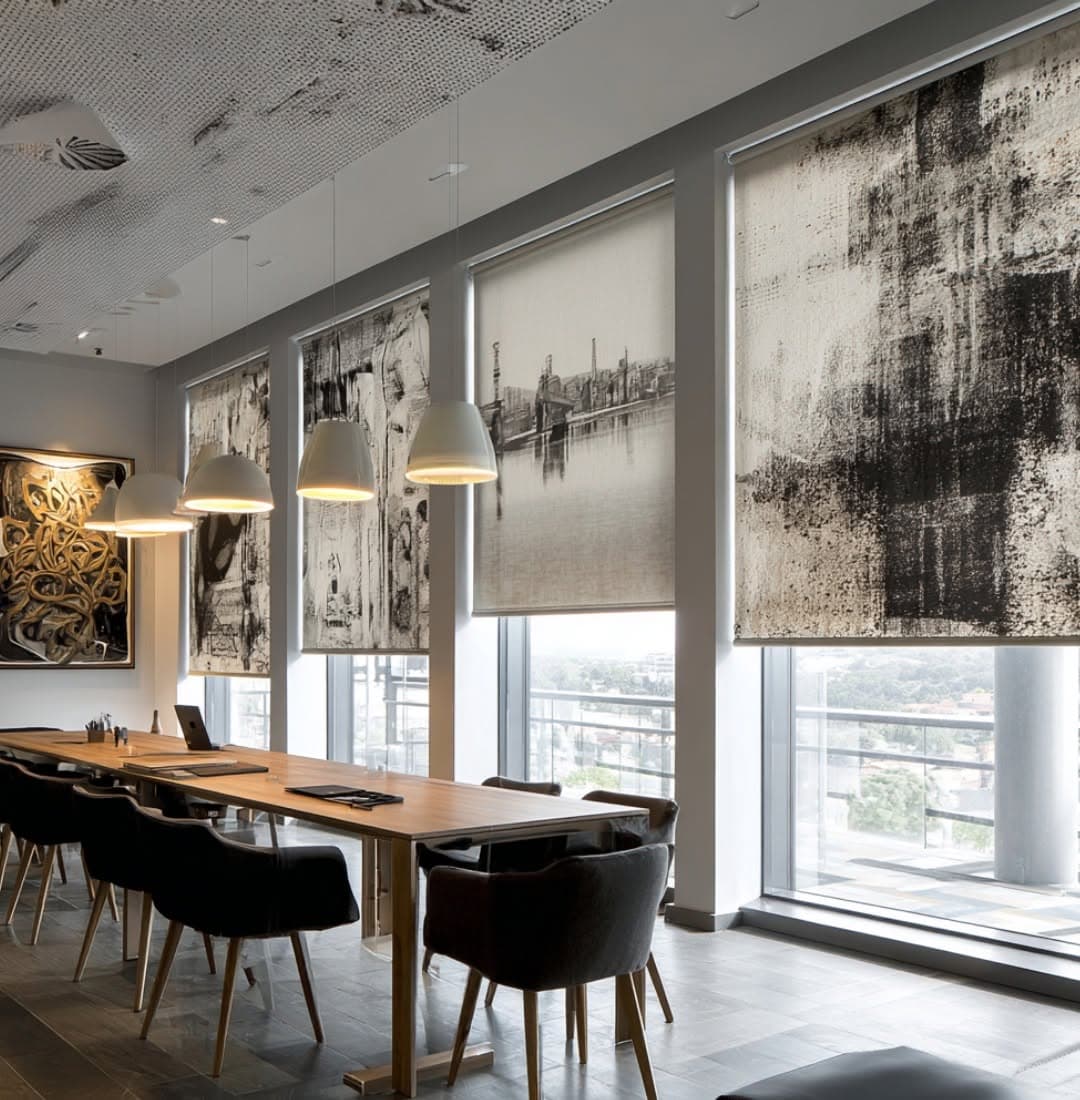
A building reads as professional when its windows match. We specify a consistent fabric, color, and mount detail across every floor and elevation, and can add printed-logo shades or brand colors where it reinforces identity — in a lobby, a clinic, or a hospitality space.
Ready to put this into practice?
Book a free in-home design consultation and we'll help you apply what you've learned to your specific rooms, light, and budget.