Honeycomb & Cellular Shades Buying Guide
What you'll learn
- Why the honeycomb cell structure makes these the most insulating fabric shade.
- Single-cell vs. double-cell, and when the upgrade is worth it.
- Opacity options from light-filtering to blackout.
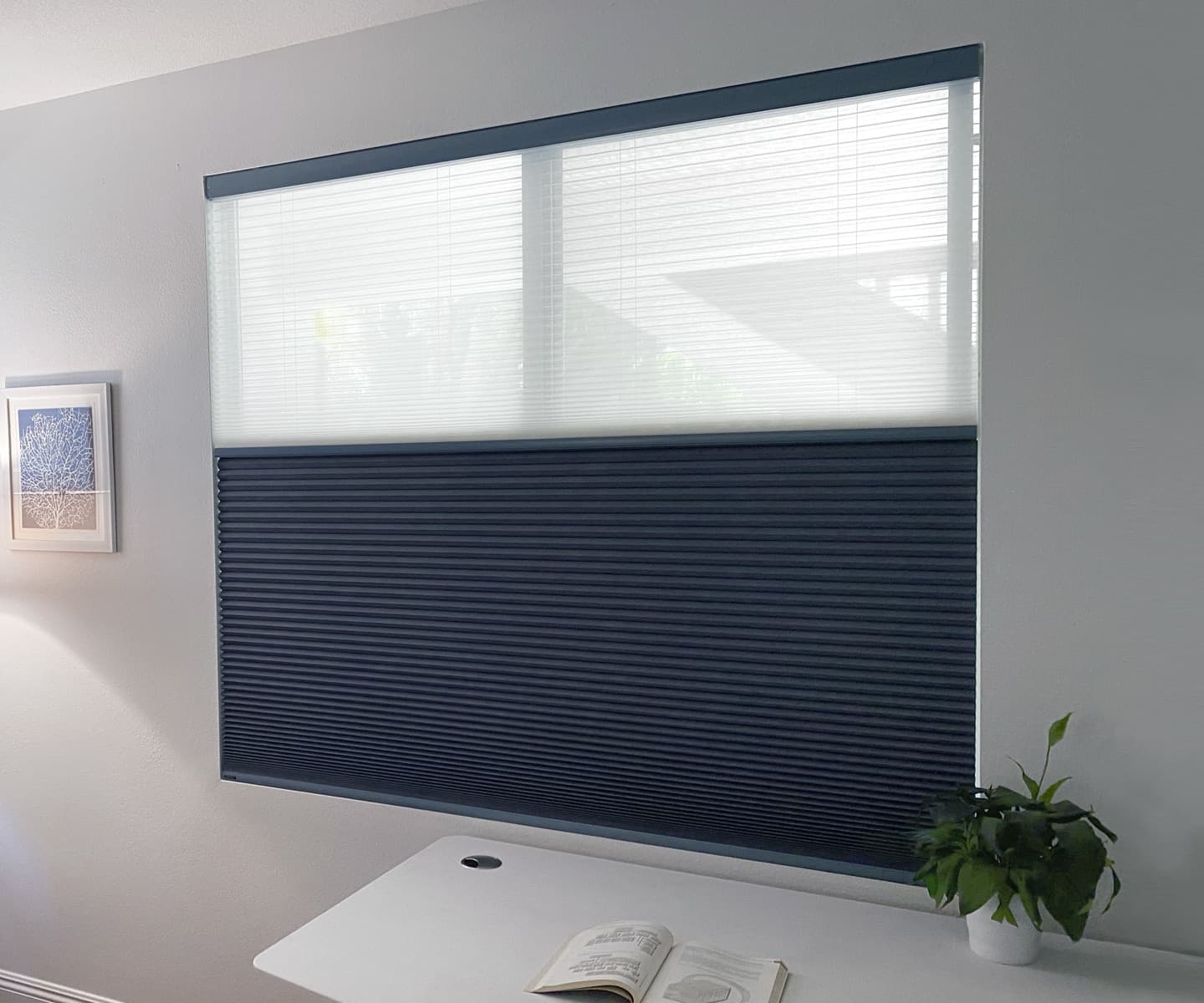
- Cordless, top-down/bottom-up, and day-night configurations explained.
Honeycomb shades — also called cellular shades — are the go-to when energy efficiency matters. Their distinctive pleated cells trap a layer of air at the window, creating an insulating buffer that slows heat transfer. In Florida, that means less heat sneaking in through the glass and a lighter load on your AC. This guide covers how to choose the right cell, opacity, and operating style.
How the Cells Work
Each honeycomb-shaped pocket holds still air, and still air is a good insulator. That trapped air is what separates cellular shades from a flat fabric shade: it reduces heat gain in summer and heat loss on the rare cool night, all in a soft, clean-looking shade.
Single Cell vs. Double Cell
| Type | Insulation | Best for |
|---|---|---|
| Single cell | Good — one row of pockets | Most rooms, larger cell size, budget-friendly |
| Double cell | Better — two rows of smaller pockets | Sun-facing rooms and anywhere efficiency is the priority |
Choosing Opacity
- Sheer / light-filtering — glows with soft, diffused daylight while keeping daytime privacy.
- Room-darkening — cuts most light for living spaces and media rooms.
- Blackout — a fully opaque liner for bedrooms and nurseries.
Operating Styles Worth Knowing
- 1
Cordless
A clean, safe look with no dangling cords — the recommended default for homes with kids or pets.
- 2
Top-down / bottom-up
Lower the shade from the top for light and a view of the sky while keeping the lower half private.
- 3
Day-night (dual)
Combines a light-filtering and a room-darkening fabric on one headrail so you can shift between them anytime.
- 4
Motorized
Ideal for tall or hard-to-reach windows; schedule shades to close during peak afternoon heat.
Ready to put this into practice?
Book a free in-home design consultation and we'll help you apply what you've learned to your specific rooms, light, and budget.